Posts

Showing posts with the label moon

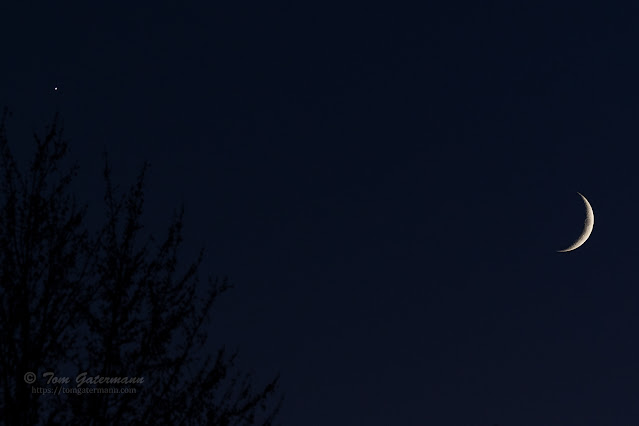
Conjunction of the Waxing Crescent Moon and the planet Saturn

Image
The Moon and the Planet Saturn in the southern sky, above Syracuse, NY. This post continues my Moon and and tiny-spot planet series .  On Wednesday, November 10, 2021, at 7 PM, the Moon and the planet Saturn could were close to each other in the southern sky above Syracuse, NY . While the planet Saturn is a white dot in the photograph, it was still interesting to see it and the Moon together.  The Moon was in its Waxing Crescent Phase on this night, and at the time of the photograph, had an illumination of 44.3%. The distance of the Moon from Earth was 376,416 km, while Saturn was 1,507.06 million km from Earth.   Photograph taken on November 10, 2021, from Syracuse, New York.
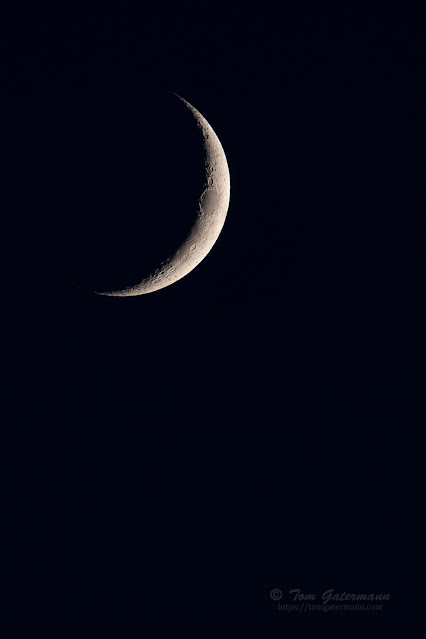
The Mare Crisium basin, during the Waxing Crescent Moon

Image
 Back on Sunday, November 7, 2021, the Moon was in its Waxing Crescent Phase. After taking a photograph of the Moon and the Planet Venus together , I captured a few photographs of just the Moon, to show more detail in its surface. The most prominent feature that is seen in the photograph is the Mare Crisium, a basin on the Moon's surface. Mare Crisium during the Waxing Crescent Moon The Mare Crisium is seen along the dark and light edge of the illuminated surface. At the time I took the photograph, around 6 PM EST, the Moon's illumination was 13.5%. With this level of illumination, the Mare Crisium had just become fully visible on the Moon's surface. According to NASA, the Mare Crisium is about 3.9 billion years old, and is 740 km (460 miles) wide. While the Mare Crisium looks to be rather flat in the photograph, NASA states that it is about 1.8 km (1.1 miles) below the Moon's lunar datum (the Moon's sea level). It also reaches to a height of 3.34 km (2.1 miles) ab...

Conjunction of the Waxing Crescent Moon and the planet Venus

Image
This past Saturday I captured some photographs of the Waxing Crescent Moon and Venus in the sky above Syracuse, New York. The two objects were too far apart, in my opinion, to get both objects in the same photograph and still see some detail in the Moon's surface. However, the following evening, Sunday, November 7, 2021, Venus had moved closer to the Moon, and I was able to capture a photograph of both of them together that I liked. The Waxing Crescent Moon and the planet Venus in the night sky, above Syracuse, NY. Venus is currently on a path that will bring it nearer to Earth, until early January 2022. On Sunday evening when I took this photograph, Venus was about 89.5 million kilometers/55.6 million miles from Earth, about 1.1 million kilometers/700,000 miles closer than on Saturday evening. Venus' closest distance to Earth in January 2022, will be about 39.77 million kilometers/24.7 million miles. The Moon was in its Waxing Crescent Phase, which occurs after a New Moon. At...

The Waxing Crescent Moon and Venus, from Syracuse, NY

Image
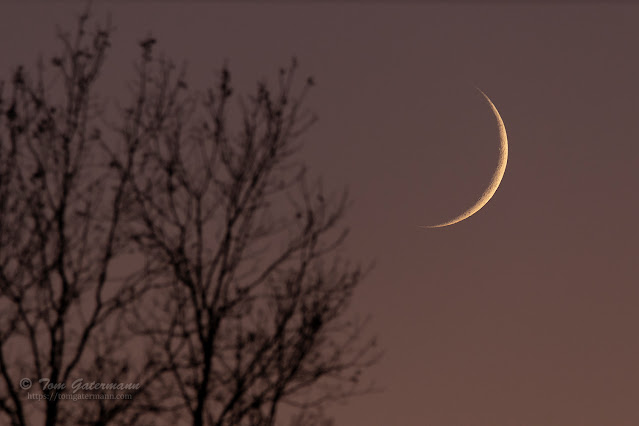
With clear skies this past weekend, I was able to capture some photographs of the Waxing Crescent Moon and the planet Venus in the sky above Syracuse, New York.  Waxing Crescent Moon The Crescent Moon with an illumination of 6.5%, on November 6, 2021. On Saturday, November 6, 2021, according to NASA, approximately 6.5 percent of the Moon was illuminated during the hour in which I took the photograph of the Crescent Moon. The  Waxing Crescent Moon  is the phase occurring right after a New Moon. The illumination of the Moon grows to 49.9% during this phase. When I took the photograph, the Moon was in the southwestern sky, and its distance from Earth at the time was approximately 362,000 kilometers/225,000 miles.  Venus in the southern sky  Venus is the southern sky, on November 6, 2021. In addition to the Crescent Moon, the planet Venus could be seen in the southern sky on Saturday night. Venus was just under 90.7 million kilometers/56.3 million miles from Earth, ...

The Moon above Lake Ontario at Oswego, NY.

Image
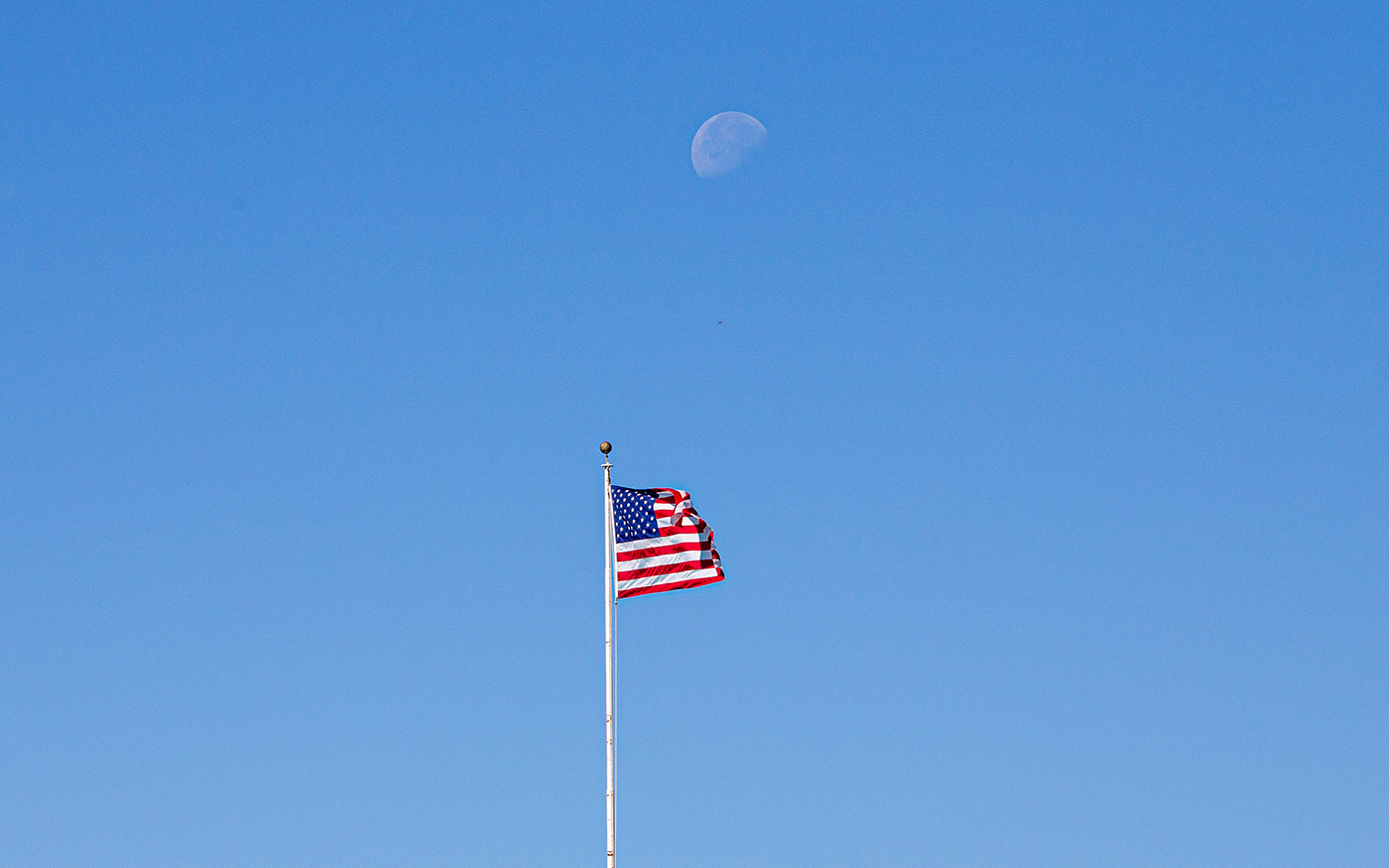
Back in September my family decided to take a drive up to Oswego, New York, to see Fort Ontario, which sits on the shore of Lake Ontario. When we arrived, the Moon was still in the sky above the lake. The Moon above Lake Ontario On this day, September 26, 2021, the Moon was in its Waning Gibbous Phase . During this phase, the amount of the Moon's visible surface from Earth decreases from 99.9% to 50.1%. The Waning Gibbous Phase occurs after a Full Moon, and before the Third Quarter Moon.  The Moon above the US Flag, at Fort Ontario.  Also, on September 26th, the Moon would be at apogee, at 5:44 p.m. EDT. According to NASA's Moon Guide this is the farthest the Moon will be from Earth during this orbit.  The Moon above Lake Ontario, from the grounds of Fort Ontario. Photographs taken on September 26, 2021, at Oswego, New York.

The Moon's Waning Crescent Phase on Sept. 29, 2021

Image
The Waning Crescent Moon phase is the phase of the Moon just before the New Moon. The current Waning Crescent phase began yesterday on September 28, 2021. It will continue until October 6, 2021, when the New Moon will occur.  The Waning Crescent Moon phase Waning Crescent Phase During the Waning Crescent Phase, the visible amount of the Moon's surface, from Earth, decreases from 49.9% to 0.1%. Today, according to timeanddate.com, approximately 44.6% of the Moon's surface is visible. Once the last sliver of the Waning Crescent Moon disappears, the New Moon will occur. The Waning Crescent Phase occurs after the Third Quarter Moon and Waning Gibbous Phase . Photograph taken at 09:28AM, on September 29, 2021, from Syracuse, NY.

The Waxing Crescent Moon

Image
 Back on August 29th, I caught the Waning Gibbous Moon in the late morning. This weekend, I was able to catch the Waxing Crescent Moon on the evening of Saturday, September 11, 2021. The Waxing Crescent Moon The Waning Gibbous Phase is when the amount of the Moon surface that is visible from Earth shrinks, ranging from 99.9% to 50.1%. The Waxing Crescent Moon is when the visible amount of the Moon's surface starts to grow, after the New Moon. The Waxing Crescent Moon's visible amount of surface ranges from 0.1% to 49.9%. The Waxing Crescent Moon Photograph taken on September 11, 2021 at 19:26 EST, from Syracuse, NY

The Moon's Waning Gibbous Phase, from Central New York

Image
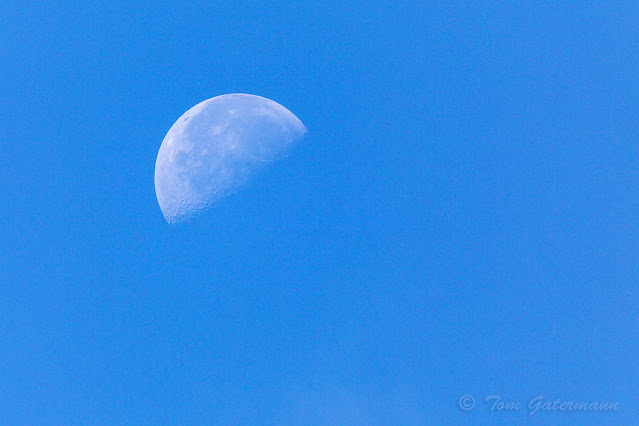
 While standing out on my deck, I noticed the Moon was still high above Central New York, so I grabbed my camera and new telephoto lens to capture a photograph of it.  The Moon from Central New York, during the late morning I had recently picked up a new telephoto lens with a maximum focal length of 600mm, so I wanted to see what kind of detail I could see in the Moon with the lens. The image was taken with a  Canon EOS 6D, and is cropped a bit. I am pretty happy, though, with the level of detail I see in the photograph. Waning Gibbous Phase On this day, the Moon was still in the Waning Gibbous Phase, which occurs after a Full Moon. The last full Moon had occurred on August 22, 2021. The phase lasts for about a week, with the amount of the Moon made visible by the sun decreasing each day. On August 30th, the Moon would enter the Third Quarter Phase. According to Timeanddate.com, the visible portion of the Moon during the Waning Gibbous Phase decreases from 99.9% to 50.1%...

Sailboats Under A Moon Lit Sky On Lake Michigan

Image
Two sailboats glide across Lake Michigan, under a cloudy and Moon lit sky. Photo taken: August 13, 2008. Chicago, Illinois.

Totality During The August 2017 Eclipse At Nashville, TN.

Image
I didn't buy a solar filter for my lenses to use during the eclipse, since I decided to just wait until totality to take my image. I snapped a quick shot of the eclipse's totality, and then spent the rest of the time enjoying the eclipse with my family and a few friends. Sometimes it's best to not always be looking through a camera. Photo taken: August 21, 2017. Nashville, TN.

All images/photographs are copyrighted © by Tom Gatermann. All rights reserved. Contact me. Subscribe.